

Enhancing Information Architecture with Machine Learning for Digital Media Platforms
My College Dissertation
My research explored the need for user experience design in machine learning functions, and the synergetic relationship between the two. It includes a proposed model for a dynamic topic selection system within the information architecture of social media platforms. This work holds massive potential for companies with digital media platforms, as well as the data science and product design community.
To read the full publication, click here.
What People Are Saying
“As a content creator, a feature like this would be a dream come true. I dread trying to come up with the right hashtags when posting something.”
— A Student in the Audience of the Research Symposium
“I like users can browse topics rather than search for specific ones. This could help people further explore content they already like, along with widening their social media exposure.”
— Steve Engel, Director of the Honors College
“I really love this. You should send this idea to the social media companies. It’s hard to believe social media sites do not do this already.”
— Chantel, a Graphic Design Student
The Problem

With 60% of the global population on social media with over 300 million uploads per day, long gone are the days of any static information architecture.
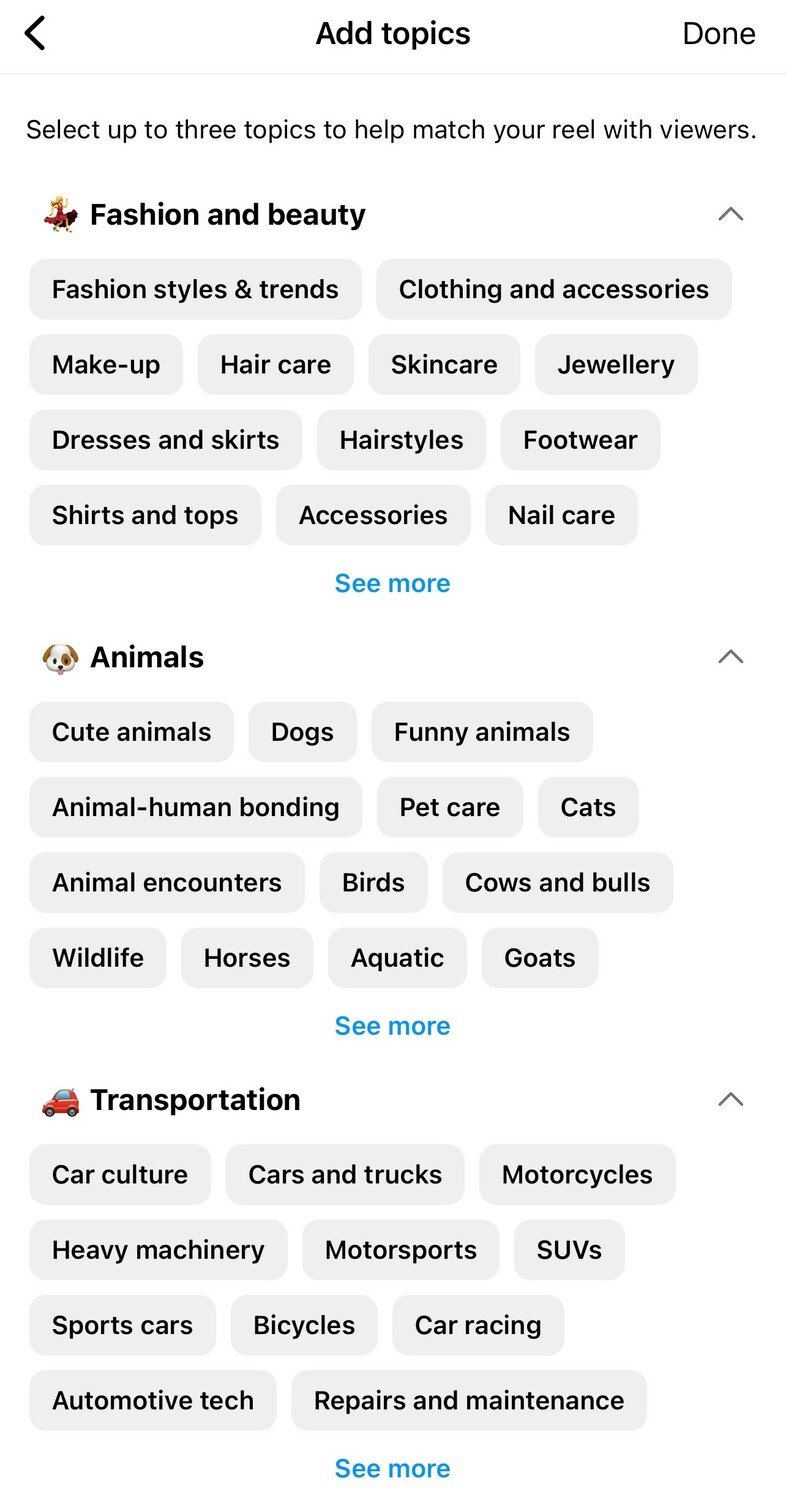
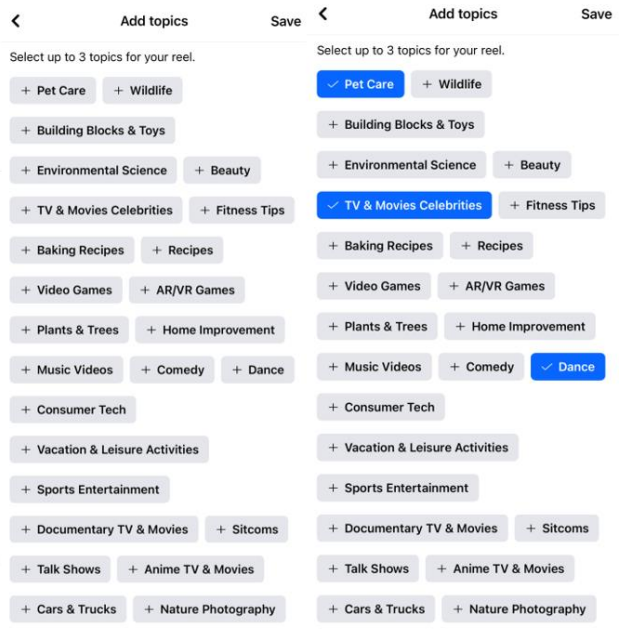
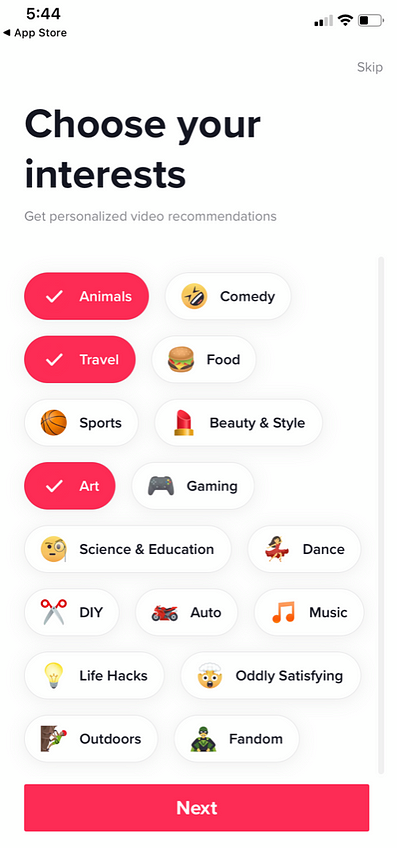
However, topic selection systems are typically static in online platforms.

The Solution
How Interests are Classified
Back-end Side
Computer vision
Deep neural networks
Natural language processing (NLP)
User-Facing Side
High-level topic selection
Keyword input
Topic selection (#)
Machine Learning helps bridge these two together!
The Proposed Model
Uploading a post
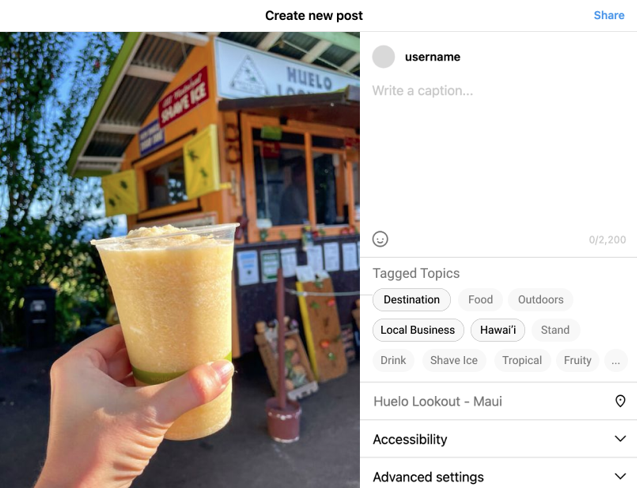
The user is able to select tags that are generated with artificial intelligence off of the image/video.
The tags are displayed in a hierarchical format. The first level being category, the second level being subcategory, and the third level being descriptives.
Scrolling through mass amount of options or manually inputting text minimizes to a single click.
The user journey
-
![]()
Step 1
-
![]()
Step 2
-
![]()
Step 3
-
![]()
Step 4




The Content Feed
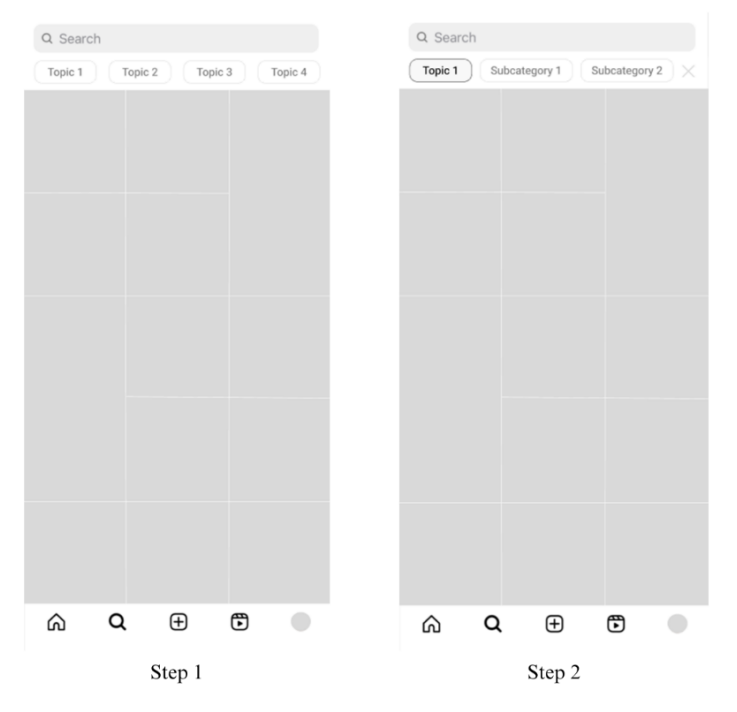

A user is able to explore through topics that are relevant to their interests.
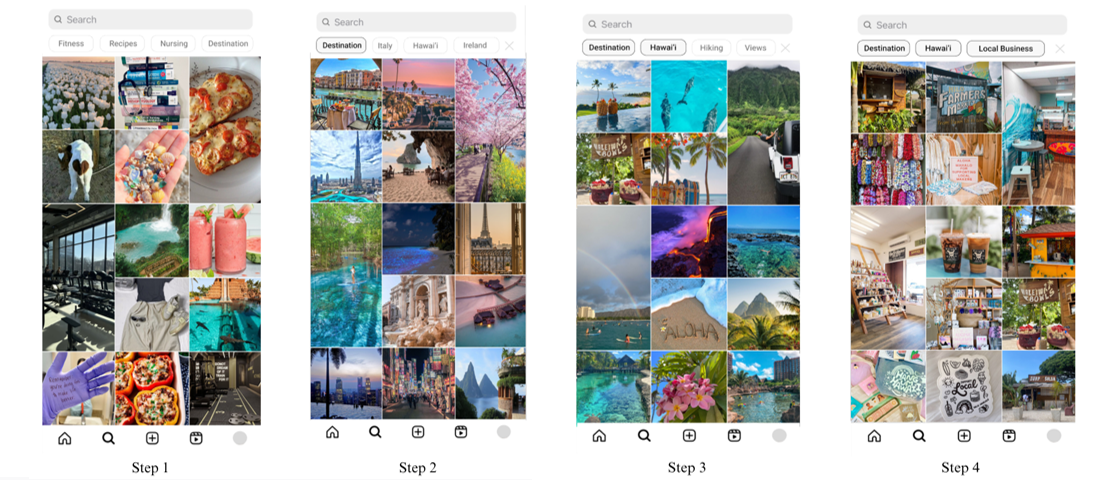
Once a user selects a topic, the options to the right regenerate to offer subtopics based off of what they’ve chosen.
In this way, a user can browse, instead of directly searching, for narrowing down their feed.
An Example
The Benefits
The Function
Creates less semantic ambiguity and synonyms
Can organize them into levels of abstraction
Decreases cognitive load
Assist in the search function
Texts and images together yields the highest accuracy for interest classification
The Design
Enhances principles of information architecture (Principle of progressive disclosure, Principle of focused navigation, Principle of attained growth)
Enhances the laws of UX (Hick’s law, Miller’s Law, Fitt’s Law, Law of Proximity, Law of Uniform Connectedness)
Conclusion
This research demonstrates that integrating user experience design with machine learning is not only complementary but essential for creating effective, scalable digital systems. By combining a dynamic topic selection model with strong information architecture and UX principles, the proposed approach reduces semantic ambiguity, lowers cognitive load, and improves search and classification accuracy through multimodal data.
To read the full publication, click here.